
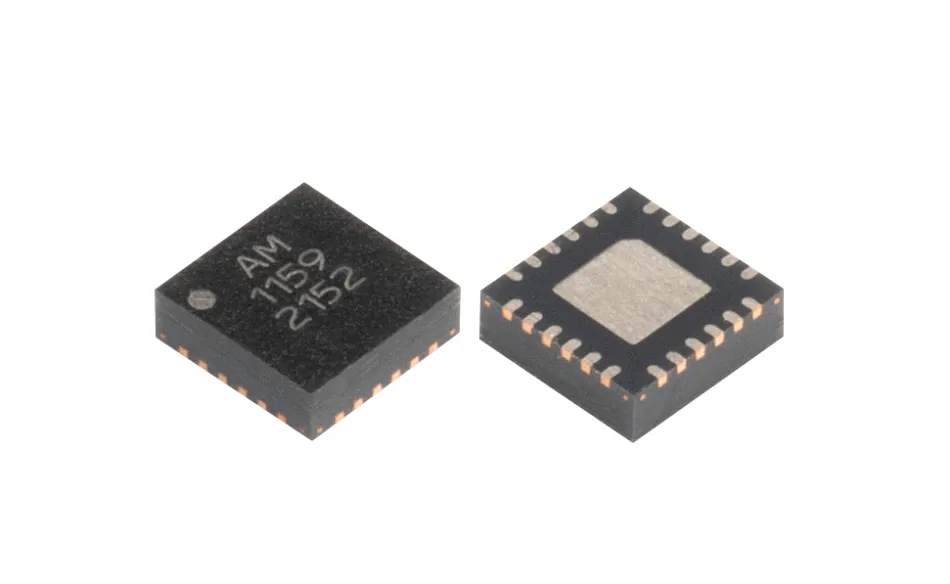
AM1159 – Amplifier: 1.4 to 20 GHz Variable Gain

1.4 to 20 GHz Variable Gain Amplifier

AM1159 is a broadband MCM combining a digital step attenuator and high dynamic range gain block covering the 1.4 to 20 GHz frequency range. The device offers 31dB of gain control varying from 17.4dB of gain to 14.5 dB of insertion loss over the full range. Packaged in a 4mm QFN, the AM1159 is a dramatic reduction in size from a discrete implementation of a variable gain block making it an ideal candidate for low SWaP applications.

 ECCN/USML:  EAR99

ASK A QUESTION

AM11592152[1].png

1.4 - 20
Frequency (GHz)
4mm
Package
31dB
Gain Control
29.6
OIP3 (dBm)
Features
  • -14.5 - 17.4 dB gain
  • 6.7 dB Noise Figure
  • 29.6 dBm OIP3
  • 3.3, 4.1 Supply (+V)
Specifications
  • Function: Variable Gain Amplifier
  • Freq. (GHz): 1.4 - 20
  • Gain (dB): -14.5 - 17.4
  • NF (dB): 6.7
  • OIP3 (dBm): 29.6
  • Supply (+V): 3.3, 4.1
  • Package: 4mm
  • Bare Die: No
  • Module: No


Products formerly Atlanta Microwave

Purpose-Built MMIC Components

Enable Portable Platforms

Leverage the latest in solid-state GaAs technology with off-the-shelf, broadband MMIC devices that operate at high frequency to enable portable and low-power platforms. 

LEARN MORE

DISCOVER MORE

Mercury Rugged Servers – Built for Every Inhospitable Corner of the Globe

Mercury's rugged #edge servers accelerate Artificial Intelligence (#AI), #Cybersecurity, Signals...

Read More

White Paper: Building an Agile Future: How Defense Edge Networks stand to benefit from the Open Compute Project

Learn how Mercury Systems is helping the DOD bridge the gap between its MOSA mandate and commercial...

Read More

Case Study: Navy CDS, Simultaneously and Securely Processing Classified Data at Sea

Discover how the U.S. Navy utilizes Mercury's scalable and configurable HD modular blade servers to...

Read More

White Paper: Real-Time Defense Systems Response Will Require PCIe 5.0

PCIe 5.0 protocol benefits a new generation of rugged, deployable application platforms with...

Read More