

Powering Golden Dome with Missile Defense Electronics
Mercury’s data and signal processing solutions power many of today’s most advanced air and missile defense systems—and will shape core Golden Dome technologies.
Launch Golden Dome Faster with Technology You Already Trust
Build Golden Dome faster and stay on budget with Mercury's advanced microelectronics and open-architecture solutions that power missile defense and electronic warfare systems across land, air and space. Built for high performance in trusted U.S. facilities, they can use AI for rapid communication while strengthening cybersecurity.
Seamless Technology Integration for Golden Dome Success
Mercury works with leading innovators and defense visionaries to seamlessly integrate advanced technologies and help bring breakthrough Golden Dome capabilities to life.
Move Golden Dome forward—from vision into technological reality.
Frequently Asked Questions:
Golden Dome is America’s next‑generation, multi‑layer defense shield built to elevate and strengthen longstanding U.S. missile defense capabilities. Designed to counter advanced threats—including ballistic, hypersonic, and cruise missiles—it will use a global network of space-based sensors, interceptors, and AI-driven systems for threat detection, targeting and interception.
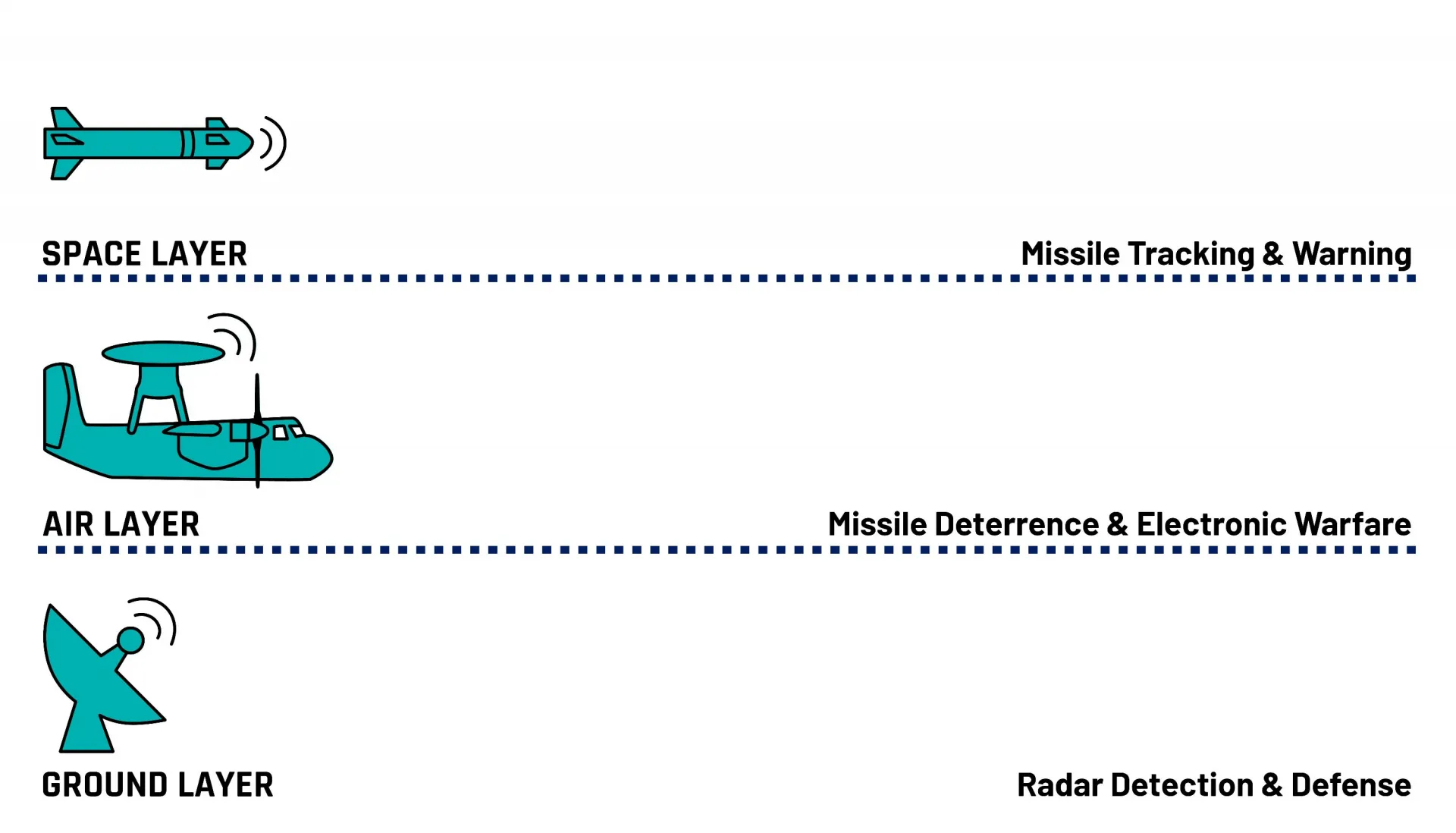
The Golden Dome will feature early early-warning sensors, mid-course interceptors and terminal defense batteries. This multi-layered structure provides several chances to detect and stop incoming threats.
Golden Dome will rely on advanced radar, supercomputers and secure communication systems to track targets and coordinate defense responses in real time.
It will use satellite surveillance and ground-based radars to identify and track incoming missile trajectories as early as possible.
Once a threat is spotted, the system will automatically calculate interception paths and launch the appropriate interceptor to neutralize it.
Specialized military personnel will oversee and manage the system, using a combination of automated controls and manual oversight
Yes, the system will be designed to engage several incoming missiles simultaneously, ensuring wide-area protection.